
CIOReview Europe Weekly Brief
Be first to read the latest tech news, Industry Leader's Insights, and CIO interviews of medium and large enterprises exclusively from CIOReview Europe
A featured contribution from Leadership Perspectives: a curated forum reserved for leaders nominated by our subscribers and vetted by the CIOReview Advisory Board.

Deputy Director of information management and CTO of Norfolk County Council
Connectivity through Collaborations
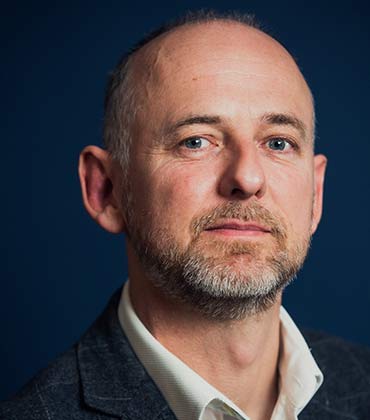
As the Deputy Director and CTO at Norfolk countycouncil, could you explain the various ways in which you are leading the digital transformation in the public sector? What are your key roles and responsibilities at your organisation and how are you leading your team towards that transformation?
The work that I am supporting stretches across the County of Norfolk. I work as Deputy Director of Information, Management and Technology for Norfolk County Council, and I also act as the Chief Technology Officer as well. In my role, I look after the operational ICT services across Norfolk County Council supporting seven and a half thousand people. The ICT services are also provided Great Yarmouth Borough Council a district council andto Norfolk Fire & Rescue, which is an emergency service. My experience in the IT sector for both the public and private sector is about 33-34 years. Before the coronavirus pandemic, the idea of working remotely for many was a myth, and with the innovations in technology, it was made possible. We embraced this and saw productivity and innovation increase exponentially. Traditionally some change projects would be planned and delivered in 12 months, and after the revolution of technology, delivery was possible in six weeks. The change of working remotely has allowed us to use innovations to maximise productivity, deliver changes in the way we provide services using Technology and help to do more for less.
Could you shed some light as to how your role at Norfolk County council is establishing ICT strategies and infrastructure deliveries?
Our strategy roadmaps are a key thing that we work on annually to make sure that we are taking every opportunity to provide more value to our business. So, we look at every single area of ICT delivery that supports our line of business and review our future operations. Norfolk county council has a 90+page strategy, which includes roadmaps, principles, and general direction, and we review that annually. We update these strategies throughout the year to ensure we take advantage of opportunities that present themselves. So, for instance, we've got a clear understanding of cloud and cloud strategy. We're going to head towards the cloud where it is possible to understand and where it's appropriate. As an application or a line of business service, we take the initiative in our strategies to look at what we do at every point possible. We started to save money which makes it easier when we come across those decisions because we've got a clear strategy telling us what we should be considering.
Is there any emerging technology in the public safety space that you're optimistic about which will be helping you in the journey of the transformation? How is it going to meet the safety requirements of the rural population?
Organisations across the world use traditional networks, and many technologists use MPLS networks. All our network contracts are coming to an end, and we have quite a large contact with Capita Business services. Our network covers 210 corporate sites and several hundred schools. And it supports all our seven and a half thousand staff. Now, when we looked at this, we could procure another MPLS network. However, considering changes since COVID-19, all our staff has been working from home and happily using machines on their home broadband we can consider a different approach.Where we have a library, a fire station, or another building where health staff may work or adults and children services, and we put a similar connection as what is typically found at homes. That enables us to implement a thing called zero trust. By Zero Trust, you trust nothing, and you secure your device, which enables a lot more flexibilityfor staff and for services that we provide to our public working communities. This flexibility is achieved through a simple network system that only needs a WiFi connection. This enables community-based service delivery, which will be a fundamental change in the way workflows.
As you may have seen in the national press, I've been rolling out the UK's largest free-to-use IoT network. So, that's the network they've implemented that covers all of Norfolk and eventually most of Suffolk; it's called the Norfolk and Suffolk Innovation Network.
There are a number of businesses in Norfolk, commercial organisations that use the network for free to enhance their own business. There is a big farming agri-tech company that uses the network to monitor crops. The company puts the monitor chip in the crops and provides the data to the farmers through their iPhones so that they can monitor the crops according to its needs. So two totally different initiatives are established. The third one that I will mention is that we have quite an active program in Norfolk where digital is great, but the connectivity is poor. To find a solution, we have taken central government up on any opportunity to improve broadband connectivity in the region. We have the ambition to be the best-connected rural county in the UK. We have taken on board various initiatives and have been delivering them.
What are some of the initiatives or programs that you have spearheaded at Norfolk county council, and how are these programs making a difference for the people?
Essentially there are a number ofnew technologies emerging, and we will exploit them as time passes to make a difference at the macro level. For instance, the classification of data in dashboards has a tremendous effect on how we deliver our services. Specifically, if you put information in people's hands it actually guide’s their decision-making. Data is essential, and we are pushing hard to get that data to people's hands through the use of things like power apps. Furthermore, we were also looking at introducing AI as we automate more. We can use AI to start considering some of the other challenges we face, group them differently, and handle them accordingly. For the future, there are many other innovations that we should be focusing on, and the one I have been spearheading is innovations and collaborations of IoT networks across the UK. The more data we collect, the better decisions we are going to make, and you cannot underestimate the impact of these better informed services.
If you could impart a piece of advice for other senior leaders and CIOs working in the ICT space, how can they extract the full potential of technologies?
There are several things that are really important to me in my role which can make a real difference, and one of them is the straightforward concept of making connections outside of your normal work sphere.It’sgood to build connections outside your normal circles and workforce. I have many friends and colleagues I work with outside my normal arena of Norfolk County Council. They provide alternative perspectives, advice and help us learn from their experience informing future endeavors, innovationsand use of technologies.
Another piece advice I would share is not to wait to plan to the nth degree before starting execution of the plan; things and technology change quickly and will do during planning.So, plan in detail for the short term and high level for the medium to long term. If there are ideas being developed whilst planning, it is important to consider them quickly and execute them as proof of concept informing future planning, start small and build on them as the journey progresses.
These two simple things will make a big difference to extracting the full potential of technology.
